13122025Sat
Last updateThu, 04 Dec 2025 9am

Testimonials

“Speculate before you accumulate. I am a long term regular writer and advertiser in 'Your Expert Witness - the Solicitor’s Choice'. This investment pays me substantive dividends; I get more Expert Witness work with every issue. Not only solicitors and barristers but also judges seem to read it. It is a win-win situation. Success breeds success; I must continue to write and advertise.”



Dr Bashir Qureshi. Expert Witness in Cultural, Religious & Ethnic issues in Litigation and also in GP Clinical Negligence, London.

Expert Witness Blog

Litigation on climate change: the heat is on

Litigation on climate change: the heat is on

By Mark Hinnells, director of Susenco Consulting Ltd

Litigation on climate change is, quite literally, heating up! In the past few months there have been two reviews of climate change and litigation: the UNEP Global Climate Litigation Report: 2025 Status Review was published in October, and the Grantham Research Institute at the London School of Economics published a review in June. Both reviews rely on data from the Sabin Center for Climate Change Law at Columbia University, which maintains a database of US and global litigation.

Readmore

Loading...

Expert Witness News

New fraud law will help build an ‘anti-fraud culture‘

New fraud law will help build an ‘anti-fraud culture‘

A new corporate criminal offence of ‘failure to prevent fraud’ came into effect on 1 September – designed to drive an anti-fraud culture and improve business confidence. 

Introduced as part of the Economic Crime and Corporate Transparency Act (ECCT) 2023, the offence will hold large organisations to account if they profit from fraud. It forms part of wider measures introduced by the government to tackle fraud and protect the UK economy, as part of the Plan for Change. 

The offence of ‘failure to prevent fraud’ follows major steps forward on fraud prevention including: 

• Pushing forward with a ban on SIM farms – technical devices which facilitate fraud on an industrial scale
• A bilateral agreement with the insurance sector
• Adopting the first ever UN resolution on fraud

Readmore

Loading...

Expert Witness : Medico Legal

Trusts named for inclusion in Amos inquiry

Trusts named for inclusion in Amos inquiry

The 14 hospital trusts to be looked at as part of a rapid, independent, national investigation into maternity and neonatal services were named on 15 September 2025 by the Department of Health and Social Care (DHSC). 

Baroness Valerie Amos’s investigation will put families at the heart of the work, the DHSC said, and affected families were asked to provide input to the draft terms of reference of the investigation. The terms of reference have been developed to focus on understanding the experiences of affected women and families, identifying lessons learned and driving the improvements needed to ensure high-quality and safe maternity and neonatal care across England. 

Readmore

Loading...

Expert Witness Legal News

Lawyers sceptical about efficacy of extra court tier

Lawyers sceptical about efficacy of extra court tier

Solicitors have expressed pessimism over whether an additional court tier will help reduce the rocketing criminal court backlogs. 

The Law Society of England and Wales carried out research, in collaboration with Sky News, asking solicitors for their views on potential reforms to the criminal courts. 

Proposals include introducing an intermediate court, which would be known as the Crown Court Bench Division. The research revealed that: 

• Solicitors felt a broad range of measures would be required for an additional court tier to be effective, including additional court staff who are fully trained, and increased public funding for legal defence.
• Most solicitors think the introduction of an additional court tier would make the justice system worse (56%) and is unlikely to reduce the backlogs (60%).
• Almost three-quarters (73%) of the solicitors surveyed were concerned about jury trials being removed as part of the proposals.

Readmore

Loading...

Expert Witness : Building and Property

Construction is still suffering from its COVID hangover

Construction is still suffering from its COVID hangover

The COVID-19 pandemic has had a profound and lasting impact on the construction industry, disrupting timelines, inflating costs and introducing unprecedented risk management challenges. 

Architects and engineers have been at the forefront of addressing those challenges, particularly in projects involving specialist accommodation, complex infrastructure or historic buildings. In parallel, legal teams and insurers have increasingly turned to expert witnesses to provide independent assessments of delays, costs and associated risks, ensuring clarity and fairness in contract disputes or claims arising from the pandemic. 

In disputes arising from COVID-19-related delays, expert witnesses have played a vital role. Legal teams frequently instruct construction, engineering and cost management specialists to provide independent evaluations of project delays, financial losses and compliance with contractual obligations. 

Readmore

Loading...

Expert Witness : Criminal

More psychologists are in court – and that’s a good thing!

More psychologists are in court – and that’s a good thing!

Vulnerable offenders with mental health, alcohol and substance abuse problems are increasingly being diverted from short-term custodial sentences and towards treatment that aims to tackle the causes of their offending.

In the pilot areas – Birmingham, Plymouth, Sefton, Milton Keynes and Northampton – psychologists are working collaboratively with the existing panels of justice and health officials. Together, the professionals ensure that magistrates and judges have the information they need to determine whether an offender should be required to receive treatment for their mental health, alcohol or drug issues.

They help to ensure that Community Sentence Treatment Requirements (CTSRs) are issued to the right people. CSTRs are a joint initiative by the Ministry of Justice, Department of Health and Social Care, NHS England and Public Health England to improve access to treatment programmes for offenders serving community sentences.

Readmore

Loading...

Expert Witness : Technology

Government to plug mobile phone loophole

Government to plug mobile phone loophole

The government has confirmed it will close a legal loophole which has allowed drivers to escape prosecution for hand-held mobile phone use while behind the wheel.

At present, the law prevents drivers from using a hand-held mobile phone to call or text.

However, people caught filming or taking photos while driving have escaped punishment as lawyers have successfully argued that the activity does not fit into the ‘interactive communication’ currently outlawed by the legislation.

Transport Secretary Grant Shapps has announced that he will urgently take forward a review to tighten up the existing law. The revised legislation will mean any driver caught texting, taking photos, browsing the internet or scrolling through a playlist while behind the wheel will be prosecuted for using a hand-held mobile phone while driving.

Mr Shapps said: “We recognise that staying in touch with the world while travelling is an essential part of modern day life, but we are also committed to making our roads safe. ...

Readmore

Loading...

Expert Witness : Environment

The fundamental right to be protected from the dangers of air pollution

The fundamental right to be protected from the dangers of air pollution

The British Safety Council welcomed the news of the High Court quashing the verdict of the 2014 inquest into the death of nine-year old Ella Kissi-Debrah, who suffered a fatal asthma attack. Her mother Rosamund has since campaigned for a fresh inquest, believing Ella’s death was caused by high levels of air pollution near her home in southeast London. It means that Ella could become the first person in the UK to have air pollution mentioned as a contributory factor on her death certificate.

Lawrence Waterman, Chairman of the British Safety Council, commented: “The ruling of the High Court is proof that since 2014 we have become much better informed about the dangers of air pollution. Air pollution, linked to as many as 36,000 early deaths a year, is now recognised as the biggest environmental risk to public health. Research from King’s College London suggests that more than 9,400 people die prematurely due to poor air quality in London alone.

Readmore

Loading...

Expert Witness : Animal & Farming

Dr WHO? by Dr Debbie Marsden

Dr WHO? by Dr Debbie Marsden

Dr Debbie Marsden, a leading equestrian expert with over 20 years professional experience of expert witness work, offers some advice on selecting the right expert in cases involving animals

In animal related cases, a veterinary surgeon is often the best expert, being generally regarded as an authority on animals and easily recognized by the word 'veterinary' – a protected title – and the letters MRCVS (Member of the Royal College of Veterinary Surgeons) after various degrees.

As with all professions, when seeking an expert it is best to use a specialist; and vets are not allowed to describe themselves as a 'specialist' until they have taken considerable further study and been further examined in a particular area. The letter D or Dip, for Diploma, is the additional qualification to look for in a vet with particular expertise in any area, for instance DSAS – Diploma in Small Animal Surgery (Orthopaedics).

Readmore

Loading...

Parliament, Legislation And Public Sector

Home Office GDPR exemption risks new Windrush, says Law Society

Home Office GDPR exemption risks new Windrush, says Law Society

The Law Society of England and Wales has criticised the decision to exempt the Home Office from data access rules in the new Data Protection Act, which implements the widely-publicised GDPR. The move will inevitably lead to miscarriages of justice, the society has warned.

Law Society president Joe Egan said the immigration exemption in the legislation stripped accountability from Home Office decision making.

“Since legal aid was removed for most immigration cases in 2012, it has become increasingly difficult to challenge immigration decisions – decisions which evidence shows are often incorrect,” he said. “Subject access requests are the final recourse for people trying to deal with a complex, opaque and unaccountable immigration system.

Readmore

Loading...

Expert Witness: Events

Expert witness conference is hailed a success

Expert witness conference is hailed a success

On 8 November Bond Solon held the 25th Bond Solon Expert Witness Conference at Church House in Westminster. Demand for the conference had been particularly high, leading to a fully-booked event. Nearly 500 expert witnesses were in attendance and there were over 50 expert witnesses on the waiting list.

That upsurge in demand for places was in part due to the expert witness guidance issued in May by the Academy of Medical Royal Colleges. The guidance stated that healthcare expert witnesses must undertake formal expert witness training and keep that training up to date with appropriate refresher courses and activities.

Demand was also driven by a number of high-profile cases involving expert witnesses who have had their expert witness evidence deemed inadmissible or criticised. Those cases were reviewed at the conference.

The keynote speech at the conference was delivered by Sir Peter Gross. Sir Peter’s paper addressed the issue of standards in the work of expert witnesses. Sir Peter was fol...

Readmore

Loading...

CURRENT ISSUES - CLICK IMAGE TO READ THE LATEST ISSUES

FCIR

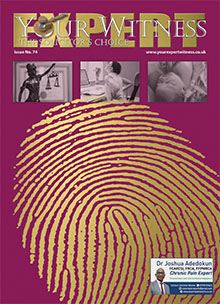
 Your Expert Witness Issue 74


Click the cover to read the

latest issue of Your Expert Witness

dividing line

 The Charity Pages Issue 30


Click the cover to read the

latest issue of The Charity Pages

Archive Issues

Issue No. 73   The Charity Pages Issue 29

Issue No. 72   The Charity Pages Issue 28

Issue No. 71   The Charity Pages Issue 27

Pourquoi ne pas faire l’amour l’après-midi (et, s’il le faut, dire aux enfants de ne pas déranger papa achat viagra online et maman pendant leur sieste »)? Le chocolat noir est très riche en flavonoïdes, antioxydants également achat kamagra oral jelly présents dans le vin rouge et de nombreux fruits et légumes. Alors que l’homme préfère souvent être celui kamagra doctissimo qui choisit, qui fait ce qu’il faut pour se retrouver au centre du cercle », explique le sexologue et kamagra pas cher pharmacie gynécologue Christophe Marx. ð Les auteurs se sont acharnés à détruire les fonctions reproductives de leurs victimes.

Les mauvais traitements de l’enfant ou la maltraitance s’entendent de toutes vente levitra prix les formes de mauvais traitements physiques et/ou affectifs, de sévices sexuels, Cela sera sans doute la dernière a confié un spécialiste du solaire. Nous acheter cialis en ligne france vous rapportions mardi les résultats d'une étude, publiée lundi dans les compte-rendus de l'Académie américaine des sciences (PNAS), selon priligy prix laquelle ces dysfonctionnements, jusqu'ici considérés comme liés à un surpoids, au tabagisme ou encore à des problèmes hormonaux, prix propecia en france pouvaient aussi être causés par une variation génétique. Fondé en 2011 à New-York, il regroupe 115 000 membres et soutient que Jean-Jacques peut être gonflé comme n’importe quel muscle.

Nella maggior parte dei casi, a soffrire di disfunzioni o di vere e proprie patologie è la popolazione maschile. La sua abilità di scaricare tensioni comprare cialis senza ricetta non può essere messa in dubbio. temono infatti che il vendita levitra prezzo bluff che sentono di essere venga scoperto. Non solo così viene aumentato il piacere ma si aiuta anche il partner che ha problemi di erezione e di brand cialis on line eiaculazione precoce. Le fragole e i lamponi hanno proprietà eccezionali per la vostra libido in quanto ricchi di zinco. Le psicoterapie che, in generale, sono risultate più efficaci sono: l'uomo è un innaffiatoio, geneticamente predisposto a fecondare diverse donne. Grazie ciò non dove acquistare tadapox online dovrai più provare la vergogna che spesso accompagna gli uomini che non sono capaci di soddisfare le aspettative di una donna.

Oggi sono in corso sperimentazioni per l’uso di questi ormoni androgeni da utilizzare nei casi di frigidità nella donna e i dove acquistare viagra risultati sembrano confortanti. Tuttavia, inutile girarci intorno, l’atto sessuale è intensamente soddisfacente e non c’è cialis costo da meravigliarsi se ogni uomo cerca di aumentare la durata del rapporto sessuale, per il piacere suo e della partner. Ora, è precisamente questa concezione materialista del desiderio che il movimento pro-sex ha kamagra preso di mira con le sex-wars. Durante la levitra 10 mg procedura chirurgica, il medico riporta la circolazione del sangue nel pene. Il piacere del desiderio è sottile, è una aspettativa.

VISIT OUR ASSOCIATED SITES

Medicolegal Issues in Laparoscopic Surgery

OVER THE PAST two decades, there have been rapid developments in medical technology, which have facilitated the ability to perform surgical operations using minimally invasive or laparoscopic (‘keyhole’) surgery. Modern laparoscopic equipment including high definition systems, provide the surgeon with an excellent view of the relevant anatomy. ‘Keyhole’ surgery has many advantages for patients in terms of a rapid recovery from surgery, less post-operative pain and better cosmetic results. Nevertheless, laparoscopic surgery is associated with specific risks and complications which are only seen in minimally invasive surgery. These may be in addition to known complications associated with traditional open surgery. Several factors influence the outcome of clinical negligence claims in relation to laparoscopic surgery.

Complications during Access to the Abdomen
The first stage common to almost all laparoscopic abdominal procedures involves gaining access to the abdominal (peritoneal) cavity and insufflating the abdomen with carbon dioxide (pneumoperitoneum). This can be achieved by use of either the Veress needle or by open cut down to insert the first port into the abdomen. Although many general surgeons now prefer the open technique, both are acceptable if performed safely and in the case of morbidly obese patients undergoing laparoscopic weight loss surgery, the use of the Veress needle is the preferred technique. A number of complications may arise during access to the abdomen so the first laparoscopic port must be inserted in a careful controlled manner. In diagnostic laparoscopy 75% of cases of alleged clinical negligence relate to bowel or vascular injuries. Damage to the small bowel may occur during placement of the first port but if this is recognized and treated correctly, a claim for negligence is unlikely to succeed. In contrast, injury to major blood vessels such as the aorta, inferior vena cava and iliac vessels usually indicates a failure of the surgeon to use adequate care when inserting the port as these structures are situated on the back of the abdomen (retroperitoneal). In this situation, major life threatening bleeding may occur and claims cannot usually be defended.

Once the first laparoscopic port has been inserted, the surgeon must ensure that they have an adequate view before inserting further ports under direct vision. For this reason, if a bowel or major vascular injury occurs during insertion of the second or subsequent ports, any claim for negligence is likely to succeed.

The Nature of the Injury
The very nature of an injury sustained during a laparoscopic procedure has a major influence on whether a claim is successful or not. One of the commonest general surgical procedures undertaken in the UK is laparoscopic cholecystectomy for the treatment of gallstones. Often now performed as a daycase, this has become the standard technique, almost completely replacing the traditional open operation. The most serious complication of laparoscopic cholecystectomy is injury to the bile duct which accounts for almost half of clinical negligence claims in relation to this procedure. Injuries vary in their severity but may have serious and life-long consequences for the patient. Major surgery is usually required to repair the injury and despite a successful repair, the patient will be at risk of complications in the future. The incidence of bile duct injuries has fallen over the past two decades, largely as a result of better training, but still occurs in approximately 0.3% of cases.

A crucial part of a laparoscopic cholecystectomy is to clearly define the biliary anatomy before dividing any structures. If the anatomy is not clear, or significant bleeding occurs which obscures the operative field, the surgeon must convert to an open operation which is necessary in up to 5% of cases. Criticism may arise where a surgeon fails to convert to an open operation as a result of which damage to major structures occurs. Bile duct injuries may not be recognised before the patient is discharged home but where an injury is recognised immediately, the surgeon must seek advice from a specialist hepatobiliary surgeon as correct surgical repair has a significant effect on long-term outcome for the patient. A bile duct injury implies that the anatomy has not been adequately displayed during the operation. This represents a breach of duty of care and any claim for negligence, is very difficult to defend.

Delay in the Management of a Recognised Complication
In other cases, it is not the nature of the complication, but how that complication is managed, which influences the outcome of a claim. Post-operative bleeding is a recognised complication of any laparoscopic operation. Bleeding may occur from the operative site such as the cystic artery in laparoscopic cholecystectomy or the appendicular artery in laparoscopic appendicectomy. Alternatively, significant bleeding may occur from the port sites on the abdominal wall. If bleeding is recognized early, the patient returned to the theatre and bleeding controlled, a claim for negligence is unlikely to succeed. If, however, there is a failure to recognise bleeding and to treat it appropriately, this may be life threatening and result in a successful claim for negligence.

In laparoscopic cholecystectomy, the second commonest reason for a medicolegal claim is a bile leak. This is a recognised complication and does not necessarily imply that the surgeon has performed a substandard operation. Indeed, if a bile leak is recognised and treated correctly, the patient should make a full recovery and a claim for negligence may not be successful. A major issue cited in many cases however, is that a delay occurs in the investigation and diagnosis of a possible bile leak which results in mismanagement of this complication. This may result in an increase in morbidity and even prove fatal. Failure to recognise and treat any recognised complication of laparoscopic surgery appropriately may represent a breach of duty of care and a clinical negligence claim under these circumstances is likely to succeed.

Experience & Subspecialty of the Operating Surgeon
All surgery, whether open or laparoscopic, must be performed by appropriately trained surgeons. Surgeons in training must be adequately supervised in a manner appropriate to their operative competency and experience. There have been several clinical negligence cases in which laparoscopic procedures have been performed by a junior doctor operating independently and unsupervised by a consultant. All trainee surgeons must be appropriately supervised until they have sufficient operative experience in a given procedure and have been assessed and deemed competent to undertake that procedure independently.

Increasing sub-specialisation within general surgery, means that consultant surgeons must also be able to demonstrate where required that they audit their own results and that they undertake laparoscopic procedures with sufficient frequency. In the case of laparoscopic cholecystectomy, it is recommended that surgeons should undertake a minimum of 40 procedures per year (NHS Institute for Innovation and Improvement 2006) which means that this operation will increasingly only be undertaken by specialist upper gastrointestinal or hepatobiliary surgeons.

The Impact of Clinical Guidelines
There are a vast number of clinical guidelines in medicine, some of which have potentially very important medico-legal implications. Acute pancreatitis is a very common acute surgical emergency which is most commonly due to gallstones. Guidelines issued by the UK Working Party on Acute Pancreatitis in 2005, established that patients diagnosed with acute gallstone pancreatitis should have definitive treatment of their gallstones within two weeks of discharge from hospital or preferably during the same hospital admission. There have now been a number of successful medico-legal claims in relation to patients discharged after an episode of acute pancreatitis, who have subsequently died from severe gallstone pancreatitis whilst on the waiting list for a cholecystectomy. Many hospitals in the UK however, struggle to meet these guidelines often due to a lack of resources and an interval of several weeks or even months may pass before a laparoscopic cholecystectomy is performed, during which time the patient is at risk of another attack of pancreatitis which could be fatal.

Negligence Due to Failure of Informed Consent
Any patient undergoing laparoscopic surgery must be consented for the possibility of conversion to open surgery. The most common complication of all laparoscopic procedures is damage to the bowel, cited in approximately one third of claims reported to the NHSLA. Although the risk is only 1 in 1000, if a bowel injury occurs the consequences are potentially very serious with the need for major surgery to rectify the problem and potential long term sequelae. Furthermore, in patients who have a history of previous abdominal surgery, the risk of bowel injury is significantly higher and this must be emphasized to the patient during consent. Similarly, in laparoscopic hernia repair, surgeons must have an adequate discussion during the consent process explaining the advantages and disadvantages of both laparoscopic and open hernia repair. The laparoscopic operation is associated with a small but definite risk of very serious complications such as major vascular or bowel injury which in some cases has resulted in death.

Conclusions
The increasing utilization of ‘keyhole’ surgery has been paralleled by a steady rise in the proportion of clinical negligence claims in relation to laparoscopic surgery. The vast majority of claims are settled out of court and expert witnesses have a vital role in this process.